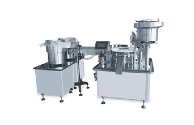
In today’s pharmaceutical, biotechnology, and chemical industries, the demand for accuracy, safety, and efficiency is higher than ever. A Reagent Filling Machine plays a crucial role in ensuring that reagents, diagnostic solutions, and laboratory chemicals are filled with precision and consistency. These machines not only improve production speed but also enhance compliance with strict industry regulations such as GMP (Good Manufacturing Practice).
Unlike general liquid filling machines, a Reagent Filling Machine is specifically engineered to handle small, often sensitive liquid volumes that require absolute consistency. In applications such as diagnostic reagent kits, PCR tests, vaccines, and life science products, even a slight deviation can affect research outcomes or patient results. Therefore, choosing the right machine is not just about automation—it is about safeguarding quality, safety, and compliance.
This article explores the key features of a Reagent Filling Machine, helping manufacturers, laboratories, and research facilities understand why choosing the right equipment is critical for productivity, quality assurance, and long-term success.
High Precision and Accuracy
Importance of Precision
Reagents are often expensive and sensitive to contamination. Even a minor error in filling volume can lead to inaccurate lab results, financial losses, or compromised patient safety. A Reagent Filling Machine is designed with high-precision pumps and nozzles that guarantee consistent volume delivery.
For example, in diagnostic reagent production, a 0.5 ml vial must contain the exact specified volume. If underfilled, the product becomes unusable; if overfilled, the manufacturer loses costly materials. By ensuring that every vial contains the precise amount, the machine not only reduces waste but also boosts customer trust.
Technologies That Ensure Accuracy
Peristaltic pumps for micro-volume dosing, ideal for sensitive or corrosive liquids
Piston pumps for larger volumes requiring strong repeatability
Sensor-based filling systems to monitor liquid flow in real time
Check-weighing systems integrated at the end of the line to verify actual fill levels
With these technologies, filling accuracy can often reach ±0.5%, ensuring maximum reliability. In comparison, manual filling usually fluctuates within ±5%, which is unacceptable in industries where consistency is critical.
Flexibility in Bottle Types and Sizes
Multi-Container Compatibility
A modern Reagent Filling Machine is not limited to one type of container. It can handle:
Glass vials for high-purity reagents
Plastic bottles for cost-efficient solutions
PET containers for lightweight and safe transportation
Test tubes and microtubes for research kits
This flexibility makes it possible for manufacturers to switch between different product lines without investing in multiple machines.
Adjustable Volume Ranges
Machines can be customized to fill anything from 0.1 ml diagnostic reagents to 500 ml laboratory solutions, making them versatile for both small-scale and industrial production. Some advanced models allow quick changeovers between container types, ensuring minimal downtime in production.
This adaptability reduces capital investment and ensures the machine grows alongside the company’s needs.
Automation and Control Systems
Advanced Automation
Reagent filling has moved away from manual operations to fully automated systems. A Reagent Filling Machine can integrate multiple processes:
Bottle feeding with unscrambler systems
Accurate filling with pump or gravity-based mechanisms
Capping and sealing with torque-controlled systems
Labeling and coding for product traceability
By combining these stages into one continuous process, manufacturers reduce labor requirements and improve throughput.
Smart Control Interface
Most machines feature a PLC (Programmable Logic Controller) and touchscreen panel, allowing operators to monitor and adjust parameters such as speed, volume, and cycle count. Some advanced models are equipped with self-diagnostic functions, which automatically alert operators if a nozzle is blocked or a bottle is misaligned.
Automation not only improves accuracy but also reduces reliance on skilled operators, ensuring consistent performance across multiple shifts.
Sterility and Contamination Control
Cleanroom-Compatible Design
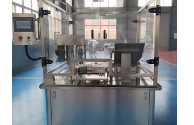
Since reagents are often used in medical or diagnostic testing, sterility is critical. Machines are designed with:
Stainless steel (SS304/SS316) for hygiene and corrosion resistance
Laminar flow hoods for aseptic filling
Closed-loop systems to prevent contamination from external air or dust
In addition, many Reagent Filling Machines are compatible with cleanroom Class 100 or Class 1000 environments, ensuring that production meets international cleanliness standards.
Benefits for Sensitive Reagents
By minimizing contamination, manufacturers ensure reagents maintain their purity, stability, and shelf life. This is particularly important for biological reagents and vaccines, which can degrade rapidly if exposed to contaminants.
Some advanced models also feature nitrogen purging systems, which displace oxygen in the container before sealing. This protects oxygen-sensitive reagents and extends product shelf life.
GMP Compliance and Safety Standards
GMP and International Standards
A Reagent Filling Machine must comply with strict regulatory requirements, including:
Good Manufacturing Practice (GMP) guidelines for cleanliness and traceability
ISO 9001 / ISO 13485 certifications for quality management
CE marking for European Union markets
FDA validation for U.S.-bound pharmaceutical products
Machines that comply with these standards help companies pass audits and expand into international markets without facing regulatory barriers.
Operator Safety Features
Reagent Filling Machines also safeguard operators through:
Enclosed chambers that minimize chemical exposure
Emergency stop buttons placed at multiple points
Automatic error alarms that halt production if anomalies are detected
This focus on safety reduces workplace risks and ensures compliance with occupational health regulations.
Production Efficiency and Scalability
Speed and Throughput
Reagent Filling Machines can process hundreds or even thousands of bottles per hour, depending on the configuration. Multi-head filling systems multiply output without compromising accuracy.
For instance, a machine equipped with eight filling heads can simultaneously fill eight bottles, cutting cycle times dramatically.
Scalability
Laboratory models for R&D and pilot runs
Semi-automatic machines for medium-scale production
Fully automatic lines for mass manufacturing
This scalability allows businesses to adapt production capacity without replacing their entire filling line. It ensures investment longevity and future-proofs operations.
User-Friendly Operation and Maintenance
Easy Cleaning and Changeover
Reagent Filling Machines are built for convenience:
Modular design for quick disassembly
Tool-free changeover between reagent types
CIP (Clean-in-Place) and SIP (Sterilize-in-Place) systems for aseptic environments
Maintenance Benefits
Durable components minimize unexpected downtime
Predictive maintenance alerts reduce long-term repair costs
Extended service life, often exceeding 10 years with proper care
For operators, these features mean shorter training times and reduced reliance on highly skilled technicians.
Integration with Data and Quality Control
Digitalization in Filling
Modern machines come with IoT-enabled features for real-time monitoring. Key functions include:
Recording fill volumes, cycle counts, and error logs
Batch traceability for regulatory compliance
Cloud-based dashboards for remote supervision
Benefits for Pharmaceutical Compliance
This ensures 21 CFR Part 11 compliance for electronic records, making audits smoother and reducing the need for manual paperwork. In addition, data integration supports continuous improvement initiatives, helping companies identify inefficiencies and optimize production processes.
Manual vs. Automatic Reagent Filling Machine
Feature | Manual Filling | Semi-Automatic Reagent Filling Machine | Fully Automatic Reagent Filling Machine |
Accuracy | Low (dependent on operator) | Moderate (±2%) | High (±0.5%) |
Speed | Slow | Medium | High |
Contamination Risk | High | Medium | Low |
Labor Requirement | High | Medium | Low |
Scalability | Very limited | Small to medium batches | Large-scale production |
Compliance | Difficult to maintain | Partial compliance | Full GMP compliance |
This comparison shows why investing in an Automatic Reagent Filling Machine is a long-term advantage. While manual filling may seem cost-effective initially, it often leads to higher waste, lower accuracy, and compliance challenges.
Why Choose BOLANG Reagent Filling Machines
Nantong Bolang Machinery Technology Co., Ltd. has over 20 years of expertise in designing and manufacturing filling equipment. Their Reagent Filling Machines are:
Customizable for different reagent volumes and packaging types
Built with GMP compliance in mind
Supported by strong after-sales service and operator training
Exported globally, with successful installations in Asia, Europe, and the Middle East
BOLANG’s engineering team also provides turnkey solutions, integrating washing, sterilizing, filling, capping, and labeling into one production line. This eliminates the need for multiple suppliers and ensures seamless compatibility.
Conclusion
The Reagent Filling Machine is more than just a piece of equipment—it is the backbone of modern reagent production. From high precision and sterility to automation, scalability, and data integration, these machines bring efficiency, safety, and compliance to industries that demand the highest standards.
As laboratories, biotech firms, and pharmaceutical companies scale their operations, investing in the right Reagent Filling Machine ensures consistent quality, regulatory compliance, and long-term cost savings.
For advanced solutions tailored to your production needs, explore the innovative range offered by Nantong Bolang Machinery Technology Co., Ltd. and discover how automation can take your reagent production to the next level.


