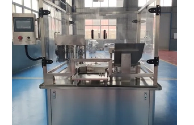
A Reagent Filling Machine is a specialized piece of equipment designed to accurately fill reagents—solutions, chemicals, or other sensitive liquids—into bottles, vials, or test tubes. These machines are widely used in pharmaceutical, biotechnology, diagnostic, and chemical industries where precision, sterility, and efficiency are critical.
Understanding the working principle of a Reagent Filling Machine is essential for laboratory managers, production supervisors, and manufacturers. By learning how the process flows from start to finish, businesses can optimize production, ensure compliance with Good Manufacturing Practice (GMP), and maintain the highest standards of product quality.
Overview of the Reagent Filling Process
The operation of a Reagent Filling Machine generally involves several interconnected steps:
Each stage of the process works in harmony through automation and precision controls. The table below summarizes the key stages:
Stage | Function | Importance |
Bottle Feeding | Aligns and delivers empty containers | Prevents misfeeds and increases efficiency |
Dispensing | Fills exact reagent volume | Ensures accuracy and prevents waste |
Capping & Sealing | Closes bottles securely | Protects product from contamination |
Sterility Measures | Maintains clean environment | Ensures reagent stability and safety |
Labeling & Coding | Adds batch and compliance info | Critical for GMP traceability |
Quality Control | Detects errors and logs data | Guarantees consistent product quality |
Bottle Feeding and Positioning
Automated Feeding Systems
The process begins with the feeding of empty bottles or vials into the production line. Most modern Reagent Filling Machines use automatic unscramblers or conveyors that align containers with precision.
Sensor Technology
Advanced sensors detect bottle presence and ensure that every container is properly positioned before filling. This prevents misfeeds, avoids downtime, and reduces material loss.
Benefits
Faster production speeds
Reduced manual intervention
Minimized risk of human error
Liquid Dispensing Mechanism
Pumping Systems
The heart of the Reagent Filling Machine lies in its dispensing mechanism. Depending on the application, different pump technologies are used:
Peristaltic pumps – Ideal for sterile and contamination-sensitive liquids.
Piston pumps – Suitable for high-viscosity reagents.
Gravity systems – Cost-effective for bulk filling with low-viscosity liquids.
Precision Nozzles
Filling nozzles are engineered to prevent dripping, foaming, or splashing. They are often equipped with diving systems that insert the nozzle into the container during filling to reduce bubble formation.
Accuracy Control
Machines achieve micro-volume precision, often with filling accuracy up to ±0.5%. This is critical for applications such as diagnostic kits, where even minor deviations can compromise test results.
Monitoring and Control Systems
PLC and Touchscreen Interfaces
Modern Reagent Filling Machines feature programmable logic controllers (PLC) and touchscreen interfaces, allowing operators to adjust filling parameters, monitor production in real-time, and troubleshoot errors easily.
Real-Time Sensors
Sensors constantly monitor:
Liquid levels in reservoirs
Bottle positioning accuracy
Pressure and flow rates
Error Detection
If the system detects a misfeed, underfill, or overflow, the machine automatically pauses or diverts the defective product, ensuring only compliant bottles move forward.

Capping and Sealing Process
Automated Cap Feeding
Once bottles are filled, they move to the capping station, where caps are automatically sorted and positioned.
Sealing Options
Screw caps – Common for plastic and glass bottles.
Aluminum seals – Widely used in pharmaceuticals.
Rubber stoppers – Ideal for sterile vial sealing.
Importance of Tight Sealing
Proper sealing ensures that reagents remain sterile, stable, and uncontaminated throughout storage and transportation.
Sterility and Contamination Prevention
Aseptic Design
A Reagent Filling Machine must meet strict sterility requirements, especially when used in pharmaceutical or diagnostic reagent production. To achieve this, manufacturers use high-grade stainless steel, sanitary pipework, and clean-in-place (CIP) systems that allow internal cleaning without dismantling the machine. Smooth contours and crevice-free surfaces reduce bacterial buildup, while modular components simplify sterilization between production runs.
Laminar Flow Integration
To further protect sensitive liquids, many machines incorporate laminar airflow systems. These create a constant stream of filtered air that maintains a sterile environment around the filling area, preventing airborne particles from entering open containers. This is particularly important in cleanroom operations where even microscopic contamination can compromise reagent stability.
Nitrogen Purging
For oxygen-sensitive reagents, nitrogen purging is often applied before sealing. By displacing oxygen inside the container, nitrogen extends product shelf life and preserves chemical integrity. This feature also helps maintain reagent consistency during transportation and long-term storage.
Labeling and Batch Coding
Integrated Labeling Systems
Once capping is complete, containers pass seamlessly into the labeling unit. Modern Reagent Filling Machines integrate automated labeling systems that ensure every bottle receives an accurate, well-aligned label without slowing production. This step is crucial for brand presentation and regulatory compliance, as even small misplacements can cause delays in distribution.
Batch Traceability
Every reagent container must include batch information for quality assurance. Codes typically provide the lot number, production date, and expiry date, allowing laboratories and distributors to trace products quickly in case of recalls or audits. Strong traceability builds customer trust and demonstrates compliance with GMP requirements.
Printing Options
Several printing technologies are available to meet different needs: inkjet printers for flexible variable data, laser marking for durable, tamper-proof coding, and thermal transfer printers for sharp, high-resolution labels. The choice depends on container type, required permanence, and regulatory demands.
Quality Control and Data Recording
In-Line Verification
Modern Reagent Filling Machines often integrate advanced weighing or vision systems that check every bottle immediately after filling. These systems confirm that each container is within the required tolerance, ensuring consistency across large batches and preventing underfilled or overfilled units from reaching customers.
Rejection Systems
If an error is detected, non-compliant containers are automatically removed from the production line. This safeguard maintains batch integrity, reduces waste, and helps avoid costly product recalls. In high-volume production, this feature significantly improves efficiency and quality assurance.
Data Logging
To meet GMP and ISO standards, full traceability is essential. A Reagent Filling Machine records detailed production data, including filling volumes, production counts, operator actions, and error records. These logs can be exported for audits, regulatory reporting, or integrated into enterprise software, helping manufacturers maintain compliance and improve long-term process optimization.
Benefits of Understanding the Working Principle
Operational Efficiency
By gaining a deeper understanding of how each component in a Reagent Filling Machine functions, businesses can optimize their workflows and streamline production. Trained operators are better equipped to quickly identify minor issues, reducing downtime and preventing costly interruptions. This knowledge also allows manufacturers to fine-tune machine settings to achieve maximum throughput without sacrificing accuracy.
Compliance and Safety
Familiarity with GMP regulations and sterility requirements ensures that operators maintain strict compliance throughout the filling process. Understanding the working principle also helps reduce the risk of contamination and enhances safety protocols, ultimately protecting both the product’s integrity and the end users who rely on accurate reagent performance.
Better Investment Decisions
For manufacturers evaluating different models, knowing how a Reagent Filling Machine works provides a clearer basis for comparison. It enables them to select machines that align with their production scale, reagent characteristics, and quality standards, ensuring both short-term efficiency and long-term scalability.
Conclusion
The working principle of a Reagent Filling Machine combines precision engineering, automation, and sterility control to ensure reagents are filled accurately and safely. From bottle feeding to capping, labeling, and quality control, each stage contributes to product integrity and compliance with international standards.
For companies in pharmaceuticals, diagnostics, and biotechnology, adopting an advanced Reagent Filling Machine is not just an investment in equipment—it is an investment in quality, efficiency, and regulatory compliance.
Nantong Bolang Machinery Technology Co., Ltd. provides cutting-edge reagent filling solutions that combine precision, automation, and reliability, helping businesses scale their production while maintaining the highest standards.


