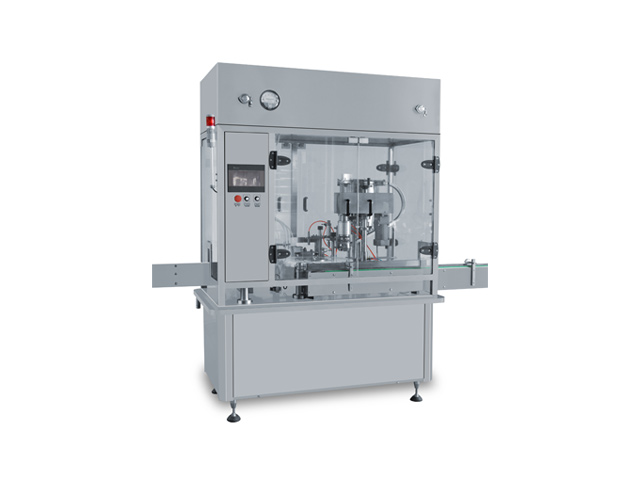
Did you know that the global ophthalmic drugs market is projected to reach $45 billion by 2030? This explosive growth is largely driven by the rising prevalence of eye-related conditions and the increasing demand for eye drop filling machines that can meet stringent pharmaceutical standards. But with hundreds of models on the market, how do you select the right eye drop filling machine for your production needs?
Choosing the wrong filling equipment can lead to product contamination, inefficient output, and regulatory compliance issues. On the other hand, selecting the right machine can boost your productivity, ensure sterility, and save you significant operational costs.
In this post, you'll learn how to choose an eye drop filling machine that meets your production, compliance, and integration needs. We'll break down everything from machine material to technological features, and provide data-driven comparisons to guide your decision.
Key Takeaway
Choosing the best eye drop filling machine involves evaluating several critical factors—material quality, machine brand, production capacity, quality compliance, user-friendliness, technological advancements, and integration capabilities. Aligning these features with your manufacturing goals ensures a smarter, more scalable investment in pharmaceutical production.
Material
When selecting an eye drop filling machine, material composition is a critical consideration. Since eye drops are pharmaceutical products, the materials used in the machine must be non-reactive, corrosion-resistant, and pharmaceutical-grade.
Key Materials to Consider:
| Machine Component | Recommended Material | Reason |
| Contact Parts | 316L Stainless Steel | Highly resistant to corrosion and easy to sterilize |
| Frame & Structure | 304 Stainless Steel | Durable and provides structural integrity |
| Tubing & Seals | Silicone or PTFE | Non-reactive and compliant with FDA standards |
Pro Tip: Always ensure that the machine material complies with GMP (Good Manufacturing Practice) and FDA regulations.
Brand and Model
Investing in a reliable eye drop filling machine brand ensures not only performance efficiency but also after-sales support, spare part availability, and easier integration.
Top Brands in the Market:
| Brand Name | Notable Model | Key Features |
| Romaco | Macofar VF Series | High-speed aseptic filling, modular design |
| Bosch | MLF 3000 | Flexible filling range, compact footprint |
| Optima | Moduline | Laminar flow, compact cleanroom design |
| Aseptic Technologies | Crystal® L1 | Ready-to-use vials, isolator integration |
| BOLANG | YGF-F | Automatic filling and capping |
| N.K. Industries | NKLFR-60 | Indian make, affordable, semi-automatic |
Choosing a reputable brand ensures validated performance under pharmaceutical manufacturing conditions.
Production Capacity
The right production capacity depends on your batch size, daily output, and growth projections. Whether you're a startup or a large-scale pharmaceutical company, production capacity can greatly affect your profitability.
Common Production Capacities:
| Machine Type | Output (Vials/Hour) | Best for |
| Semi-Automatic | 1,200 - 3,000 | Small-scale units, R&D facilities |
| Fully Automatic | 6,000 - 12,000 | Mid to large-scale production |
| High-Speed Rotary Machines | 15,000+ | Industrial, high-volume setups |
Scalability Tip: Choose a machine that allows modular upgrades to support future growth.
Quality Compliance
In pharmaceutical production, compliance isn't optional—it's mandatory. Your eye drop filling machine must adhere to international standards to avoid product recalls, regulatory penalties, and brand damage.
Critical Compliance Standards:
GMP (Good Manufacturing Practices)
FDA 21 CFR Part 11 (for electronic records)
CE Marking (for European market)
ISO 9001 & ISO 13485 (quality management systems)
USP Class VI Certification (for contact materials)
| Compliance Standard | Applies To | Importance Level |
| GMP | Overall manufacturing process | ⭐⭐⭐⭐⭐ |
| FDA 21 CFR Part 11 | Data integrity & controls | ⭐⭐⭐⭐ |
| ISO 13485 | Medical device quality systems | ⭐⭐⭐⭐ |
Always request validation documentation and certificates from the manufacturer before purchase.
User Friendly
An eye drop filling machine should be intuitive to operate, maintain, and clean. User-friendliness contributes to lower training costs, higher uptime, and less risk of human error.
Features That Enhance Usability:
Touchscreen HMI (Human-Machine Interface)
Tool-less changeover
Automatic error detection
Easy CIP (Clean-in-Place) and SIP (Sterilize-in-Place) systems
| Feature | Benefit |
| Touchscreen interface | Easy operator interaction |
| Modular design | Quick changeovers between products |
| CIP/SIP | Ensures sterility with minimal effort |
Consider machines with multi-language HMI if operating in a global environment.
Technological Advancements
Modern eye drop filling machines are no longer just mechanical—they're intelligent systems with advanced automation, robotics, and data integration.
Top Innovations in Eye Drop Filling Machines:
Servo-driven filling systems for precision
Vision inspection systems for cap placement and fill level
HEPA filtration for sterile airflow
IoT-enabled diagnostics for predictive maintenance
AI-based error correction and adaptive learning
| Technology | Benefit |
| Vision Systems | Detects misaligned caps and incorrect fills |
| AI & Machine Learning | Predicts failures, optimizes performance |
| IoT Integration | Real-time monitoring and remote alerts |
Stay ahead of the curve by investing in machines that support Industry 4.0 protocols.
Integration with Other Support Machines
An eye drop filling machine doesn't operate in isolation. To build a seamless production line, it must integrate with washing, drying, labeling, and packaging machinery.
Typical Integration Line:
Vial Washing Machine
Sterilization Tunnel
Eye Drop Filling Machine
Capping Machine
Labeling Machine
Cartoning Machine
| Machine Type | Integration Requirement |
| Washing & Drying | Must match infeed speed and format |
| Capping & Labeling | Should sync with filling output |
| Packaging & Cartoning | Automates final delivery |
Ensure communication protocols (e.g., PLC, SCADA) are compatible across machines.
Conclusion
Choosing the right eye drop filling machine is a strategic investment that can shape the success of your pharmaceutical business. From material selection to production capacity, from compliance to AI-powered features, every aspect of your machine affects your efficiency, quality, and scalability.
To summarize:
Start with your production goals.
Evaluate material and compliance standards.
Choose a reliable brand with proven performance.
Opt for machines with scalable capacity and advanced features.
Ensure seamless integration with the rest of your production line.
By considering these factors, you'll not only improve your current output but also pave the way for sustainable growth in the competitive pharmaceutical market.
FAQs
Q1: What is the most important factor when choosing an eye drop filling machine?
A: The most critical factor is compliance with pharmaceutical regulations (GMP, FDA, ISO) followed by production capacity and machine reliability.
Q2: Can eye drop filling machines be used for other liquid pharmaceuticals?
A: Yes, many models are versatile and can handle other sterile liquids such as nasal sprays and ear drops, provided the filling system is compatible.
Q3: How often should an eye drop filling machine be calibrated?
A: Calibration should be done at least once per production cycle or after any maintenance. Always follow the manufacturer's SOP.
Q4: Are there eco-friendly options for eye drop filling machines?
A: Yes, newer models come with energy-efficient motors, HEPA filters, and reduced water usage for cleaning. Look for ISO 14001 certified machines.


